1. Introduction
Brain disorders account for approximately one-third of the global disease burden and include neurodevelopmental, mental, neurodegenerative, and sensory conditions, such as autism spectrum disorder, attention deficit/hyperactivity disorder, Parkinson’s disease, Alzheimer’s disease, and age-related sensory loss.1–3 Mental health problems affect 10-20% of children and adolescents globally,4 with approximately one in seven individuals aged 10–17 years experiencing a mental disorder.5 Therefore, promoting brain health from childhood and adolescence represents an important public health priority.6
Given the growing burden of brain disorders across the lifespan, increasing attention has been directed toward the concept of brain health. Brain health is a multidimensional concept that includes cognitive, sensory, social-emotional, behavioral, and motor aspects of functioning.6,7 It is shaped by multiple determinants across the lifespan, including lifestyle, family and school environments, socioeconomic conditions, and access to health-promoting resources.8,9 Physical activity, healthy nutrition, adequate sleep, positive social interactions, and avoidance of harmful substances are all associated with better cognitive and emotional well-being.10–13 These factors are relevant from early life, although in childhood they are strongly influenced by family and educational environments.14 Parents and caregivers support development through nutrition and stimulation, while school settings further promote learning and social interaction.15,16
Childhood represents a critical period for prevention and health promotion initiatives as many determinants of brain health emerge early in life. Promoting brain health requires interdisciplinary and context-sensitive educational strategies. While tailored school-based interventions can support the adoption of lifelong health-promoting behaviors17,18 there remains a critical gap in understanding the foundational knowledge and individual perspectives of children regarding these behaviors. Thus, delineating attitudes and stances of children towards brain health determinants in a particular local context is an essential prerequisite to designing effective, equitable brain health initiatives for children.
2. Objectives
Building on this necessity, the primary objective of this study was to explore primary school students’ knowledge, attitudes, and perceptions regarding brain health and its determinants in the metropolitan area of Patras, Western Greece, a region with elevated socioeconomic vulnerability.19 Specifically, the study aimed to examine students’ perceived influence of lifestyle, environmental, social, and biological factors on brain health; assess their knowledge and awareness of brain-related diseases; investigate their engagement in brain health–promoting activities, both intentional and non-intentional; and evaluate their openness to adopting lifestyle changes aimed at reducing the risk of brain diseases.
3. Methods
3.1. Participants
Participants were students recruited through collaboration with 22 public primary schools in the metropolitan area of Patras. School principals were approached and agreed to participate, and all students in the selected classes were invited to participate. The questionnaire was administered in paper-based form in classroom settings during school hours under the supervision of researchers and teachers. Written informed consent was obtained from the parents or legal guardians of all students (hereafter referred to as participants). Participants were informed that their participation was voluntary.
Sociodemographic information, including parental education, family structure, professional status, and family history of brain disease, was collected through a separate parental consent and information form completed by parents or legal guardians. Data collection took place between February and March 2024, and completion of the questionnaire required approximately 20–25 minutes. Ethical approval for this study was obtained from the Research Ethics Committee of the University of Patras (Approval No. 93957, Patras 05/12/2023). All procedures performed were in accordance with the ethical standards of the institutional and national research committees and with the 1964 Helsinki Declaration and its later amendments.
3.2. Brain health attitudes assessment
Participant attitudes related to brain health issues were studied with a modified version of the Global Brain Health Survey Questionnaire, which is an anonymous online questionnaire available in 14 languages to anyone above the age of 18 years.10 The original questionnaire consists of 28 items and takes 15–20 min to complete. The items of the questionnaire focus on (1) willingness and motivation to maintain or improve brain health, (2) interest in learning more about individual brain health using standardized tests, and (3) interest in receiving individualized support to take care of their own brain health. The initial development of the survey questions was based on results from a qualitative interview study investigating brain health perceptions among participants in brain research studies.
For the needs of the present study, the instrument was translated into Greek by a bilingual member of our team. A bilingual expert unfamiliar with the original Global Brain Health Survey performed a back translation into English. The comparison of the original English version with the back translation showed that the new version was similar to the original one. The questionnaire was then modified for children by a child and adolescent psychiatrist (KK) and three educationalists (GA, NM, ST).
Specific modifications were implemented to ensure age-appropriateness without altering the original survey’s focus areas, including motivation, interest in brain health, and personalized support. The items related to blood pressure- or cholesterol level measurements as well as those pertaining to the participants’ openness to a brain health test were not included in the modified Global Brain Health Survey questionnaire for school children (GBHSQ-C), as they were considered inappropriate for this age group. In addition, further refinements were made so that the wording aligned with the public, primary school cultural context in Greece (e.g., intention to change behavior after a hypothetical pediatrician advice).
The GBHSQ-C is structured into four sections, consistent with the original survey. The first section collects demographic information, including sex, age, and school class. The second section explores children’s perceptions of factors affecting brain health, such as diet, exercise, and sleep, alongside their willingness to maintain or improve these behaviors. The third section investigates children’s knowledge of brain health, including awareness of brain-related diseases and engagement in brain health–promoting activities. The final section assesses barriers and facilitators to lifestyle change, including readiness to adopt brain health–promoting habits and perceived obstacles. No formal pilot testing or cognitive interviewing with children was conducted prior to administration. Therefore, the present study should be considered a pilot exploratory study assessing feasibility and internal consistency of the adapted instrument. The modified version of the questionnaire is provided in the Supplementary Material.
Responses were measured using a combination of Likert-type scales depending on the section. Perceptions of factors influencing brain health were assessed using a five-point Likert scale (0 = no influence to 4 = very strong influence). The importance of different life stages was assessed using a four-point Likert scale (0 = not important to 3 = very important). Knowledge of brain diseases was assessed using a binary scoring system (correct = 1, incorrect = 0). Engagement in brain health–promoting activities was assessed using a four-point Likert scale (0 = never to 3 = frequently) for both intentionally considering brain health and without explicit consideration of brain health. Openness to lifestyle changes was assessed using a five-point Likert scale, with higher scores indicating greater likelihood of adopting such changes.
3.3. Statistical analyses
Responses to the questionnaire were analyzed using Cronbach’s alpha to assess internal consistency,20 and Mann-Whitney and Independent Median tests were employed for group comparisons. A p-value < 0.05 was considered statistically significant. Cronbach’s alpha values of 0.90 and above were considered to indicate very high internal consistency. Values ranging between 0.80 - 0.89 reflect strong internal consistency, while values between 0.70 - 0.79 point to acceptable internal consistency. Values ranging between 0.60 - 0.69 reflect questionable internal consistency and values lower than 0.60 indicate poor internal consistency.20 Missing data were minimal and handled using pairwise deletion. No imputation was performed. Data were analyzed using IBM SPSS Statistics (Version 26).
4. Results
The study included 346 fifth-grade participants from 22 public, primary schools. Participants were aged 10–11 years. The sample consisted of 173 females (50%), 167 males (48.3%), and six participants (1.7%) who did not provide information about their gender. Most participants (N=286, 82.7%) grew up in two-parent families, with a working father (N=326, 94.2%) and a working mother (N=263, 73%). Regarding parental education, the preponderance reported that both parents had more than 12 years of education. Additionally, 21.4% of participants reported that at least one family member (parents, siblings, or grandparents) had a brain disease. Most participants (N=333, 96.2%) reported knowing what the brain is, and the majority pointed out that they think about their brain health either often or sometimes. The detailed characteristics of the sample are presented in Table 1.
Estimated extent of influence of factors on Brain Health
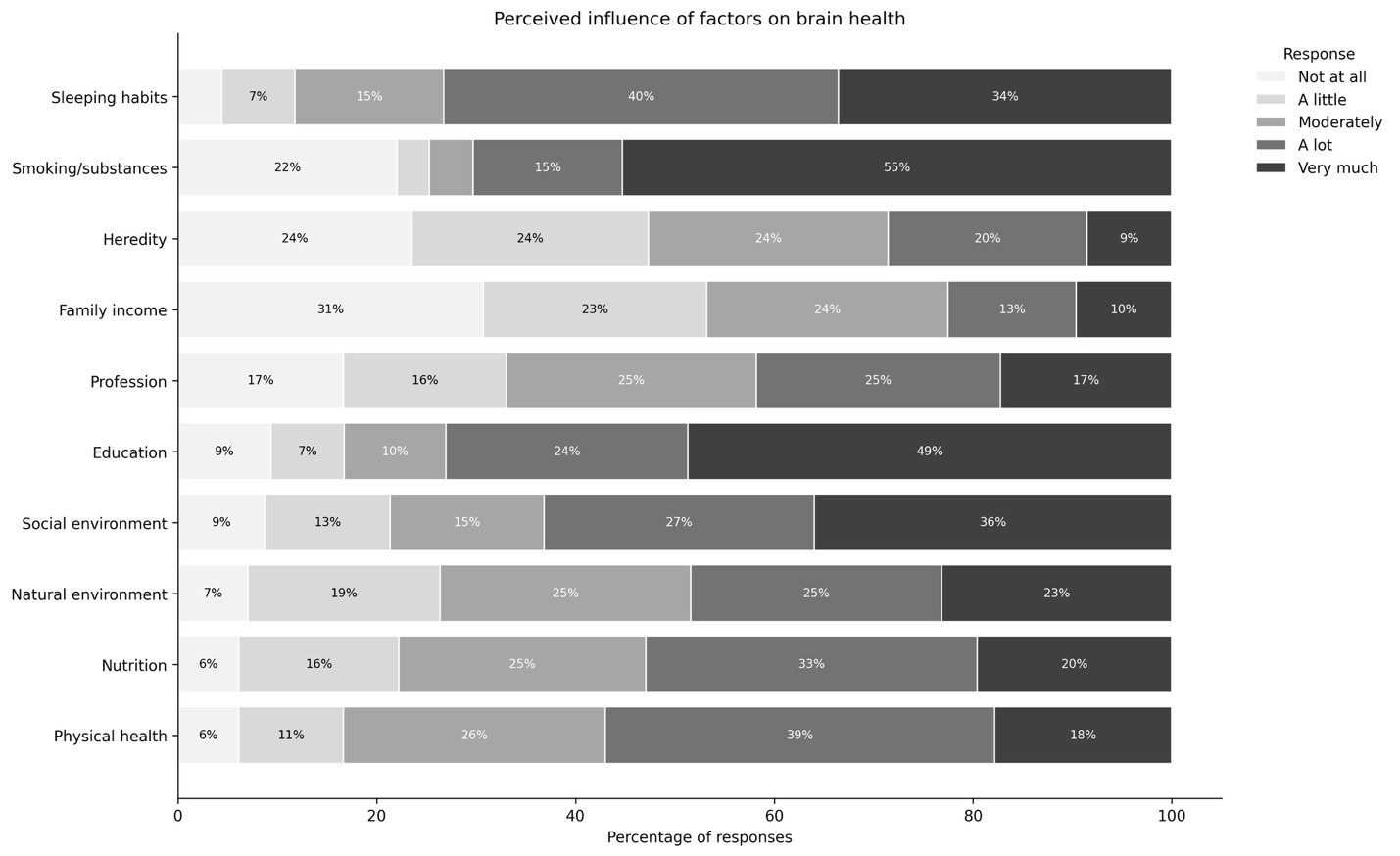
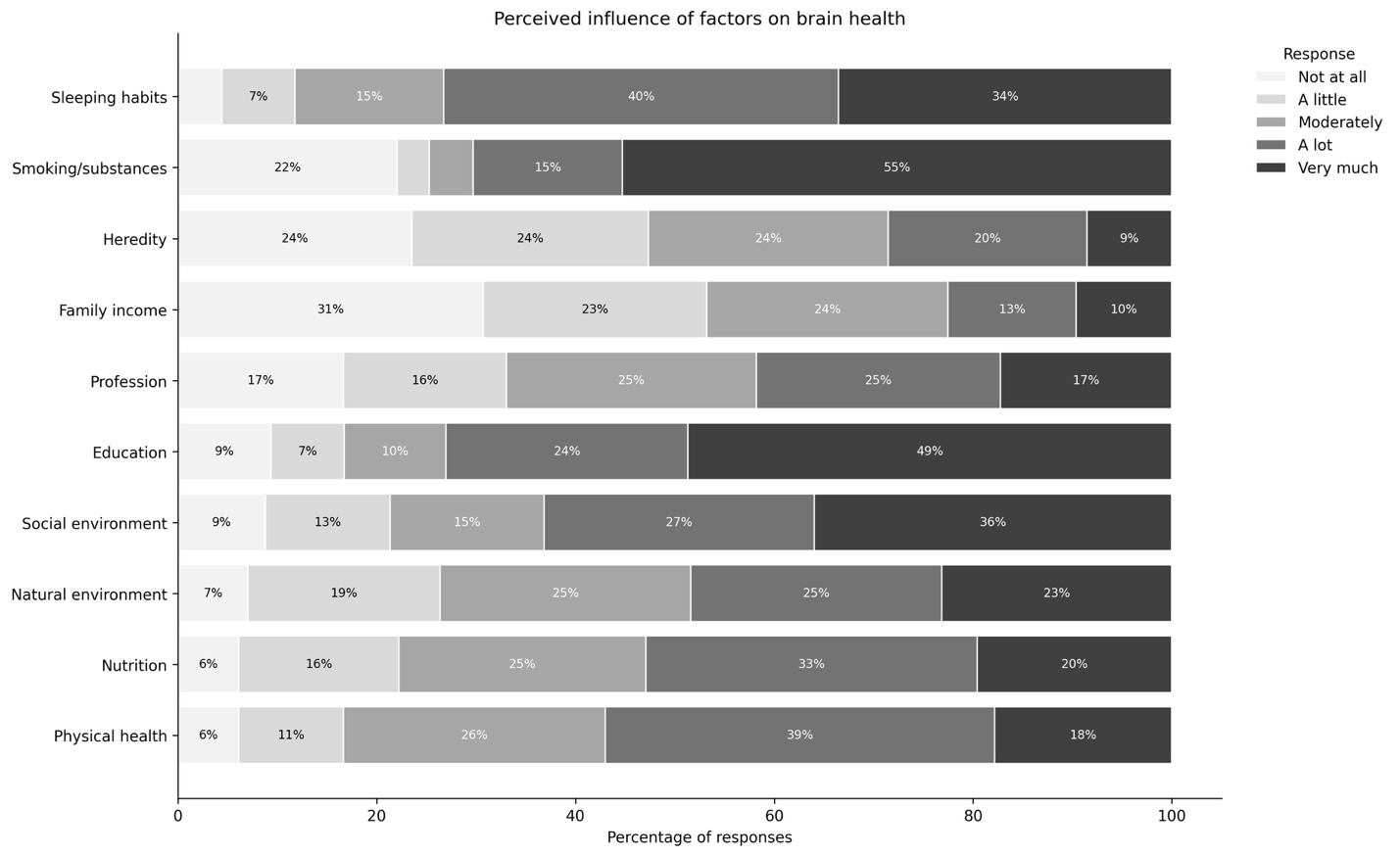
The perceived influence of various factors on brain health, including physical health, diet, environment, social context, education, income, genetics, smoking, sleep, and life goals, demonstrated acceptable internal consistency (Cronbach’s alpha = 0.693). Item-wise analysis showed that removal of the “Smoking” item improved reliability (Cronbach’s alpha = 0.723). Among the factors assessed, “Education” and “Sleeping Habits” were rated as having the strongest influence on brain health, whereas “Smoking” was rated as having the lowest influence. Figure 1 presents the mean scores and standard deviations for each factor.
4.1. Importance of different life stages for looking after one’s brain health
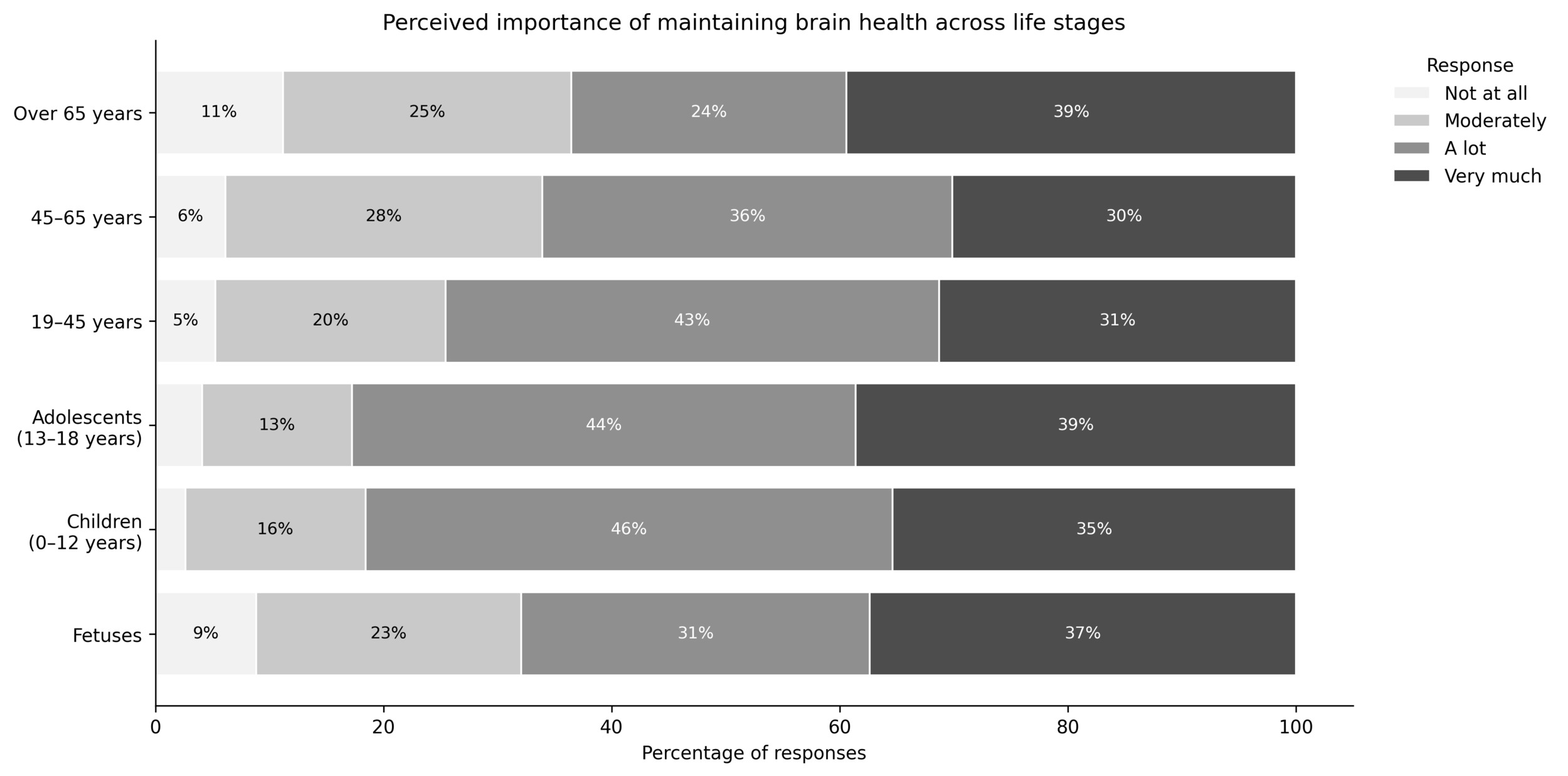
The perceived importance of maintaining brain health across different life stages demonstrated acceptable internal consistency (Cronbach’s alpha = 0.680). Childhood and adolescence were rated as the most critical stages for brain health, whereas old age was considered the least critical (Figure 2).
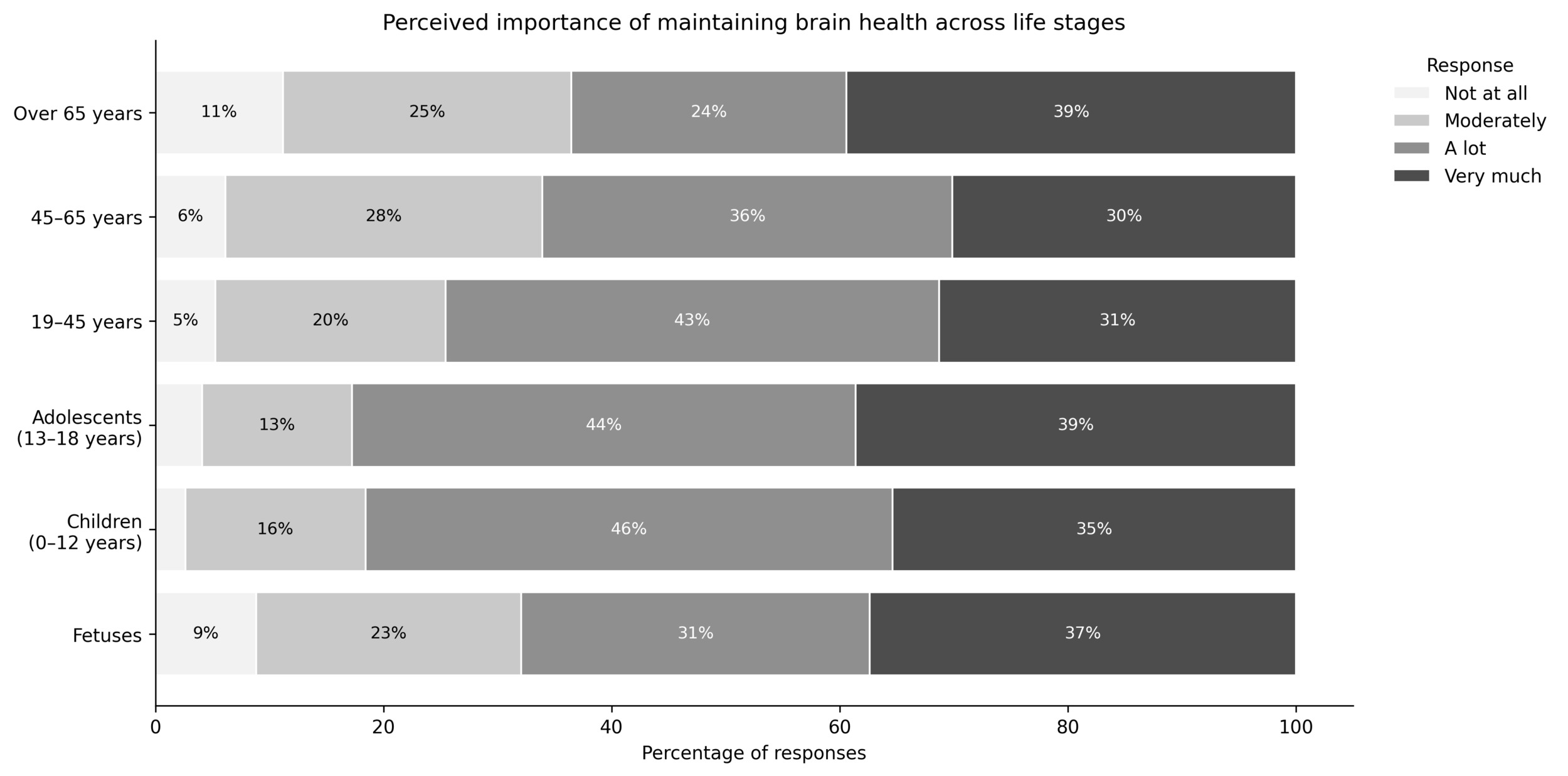
No statistically significant differences were observed across demographic and family-related variables (e.g., gender, family members with brain diseases, parental education, or professional status) in relation to participants’ knowledge of brain health importance, as all p-values exceeded the standard threshold of 0.05.
4.2. Knowledge of Brain Diseases
Participants’ knowledge of brain diseases demonstrated poor internal consistency (Cronbach’s alpha = 0.580). Arthritis, migraine, and stroke were most frequently identified as brain-related conditions, whereas bipolar disorder, Parkinson’s disease, and diabetes were least frequently associated with the brain.
No significant differences were observed across most demographic variables, including gender, family history of brain disease, parental professional status, birth order, and number of children in the family (all p > 0.05). However, a significant difference was identified according to family status (p = 0.044). Pairwise comparisons showed a significant difference between participants from one-parent families and those from families with separated parents (p = 0.041, adjusted for multiple comparisons), while no differences were observed between one-parent and two-parent families (p = 0.378) or between two-parent and separated-parent families (p = 0.196).
4.3. Frequency of Engagement in Brain Health-Promoting Activities
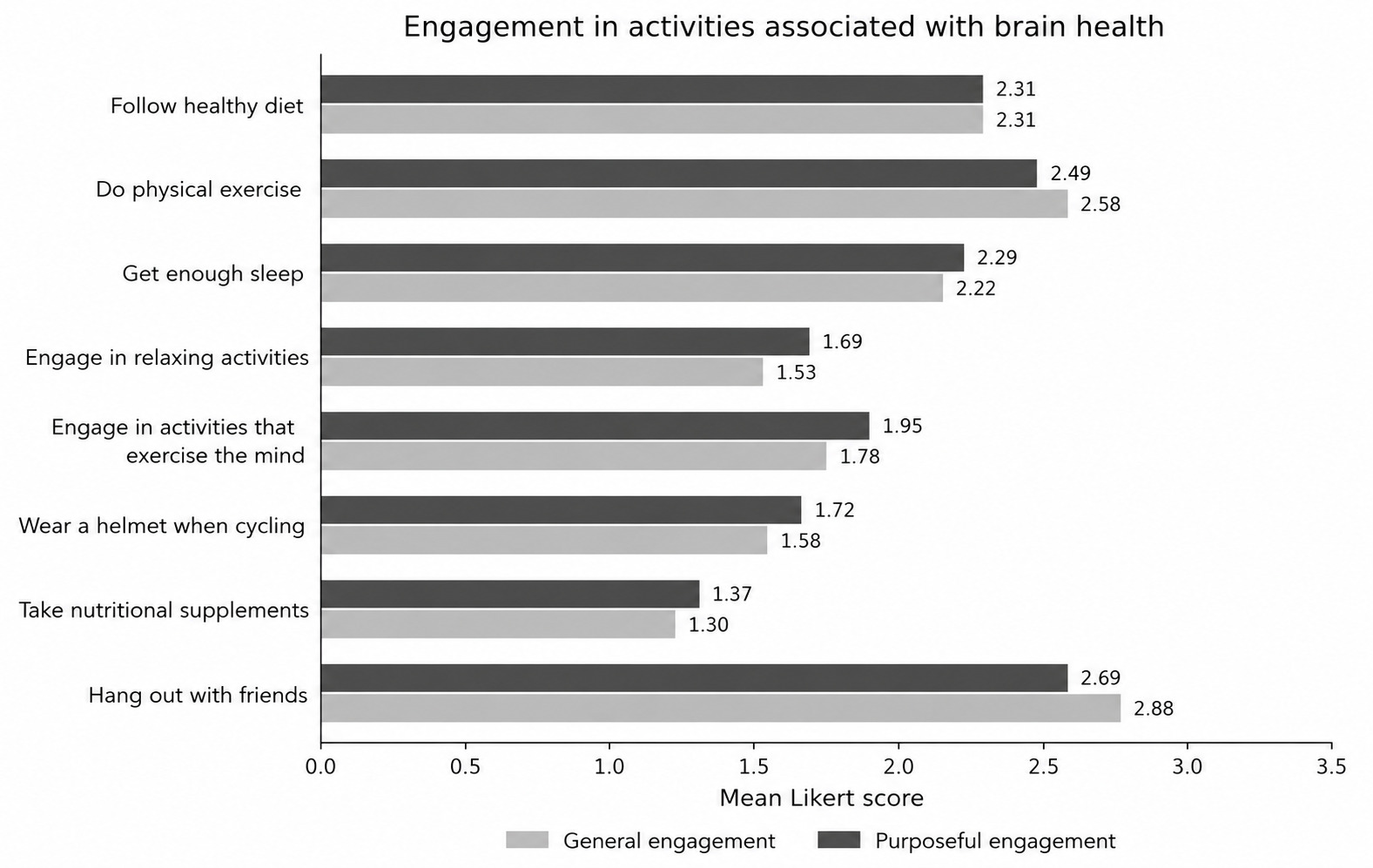
Participants’ engagement in brain health–promoting activities was assessed both without explicit reference to brain health and with intentional consideration of their beneficial effects. Internal consistency was questionable for non-purposeful engagement (Cronbach’s alpha = 0.651) and acceptable for purposeful engagement (Cronbach’s alpha = 0.699).
The results revealed notable trends across activities. Social activities like “Hanging out with friends” and physical activity demonstrated consistently high engagement scores both intentionally and without explicit consideration of brain health (Figure 3). The consumption of nutritional supplements was the activity in which fifth-class participants were least frequently engaged with or without reference to brain health promotion, while “Engaging in relaxing activities” also showed a low frequency irrespective of its effects on brain health. Interestingly, the frequency of purposeful engagement in activities such as “Devoting time to studies and family” and “Engaging in activities that exercise the mind” in order to promote brain health, was higher compared to involvement in such activities without consideration of their beneficial effects on brain health. A significant association was observed between thinking about brain health and engagement in brain health–promoting activities (p < 0.001).
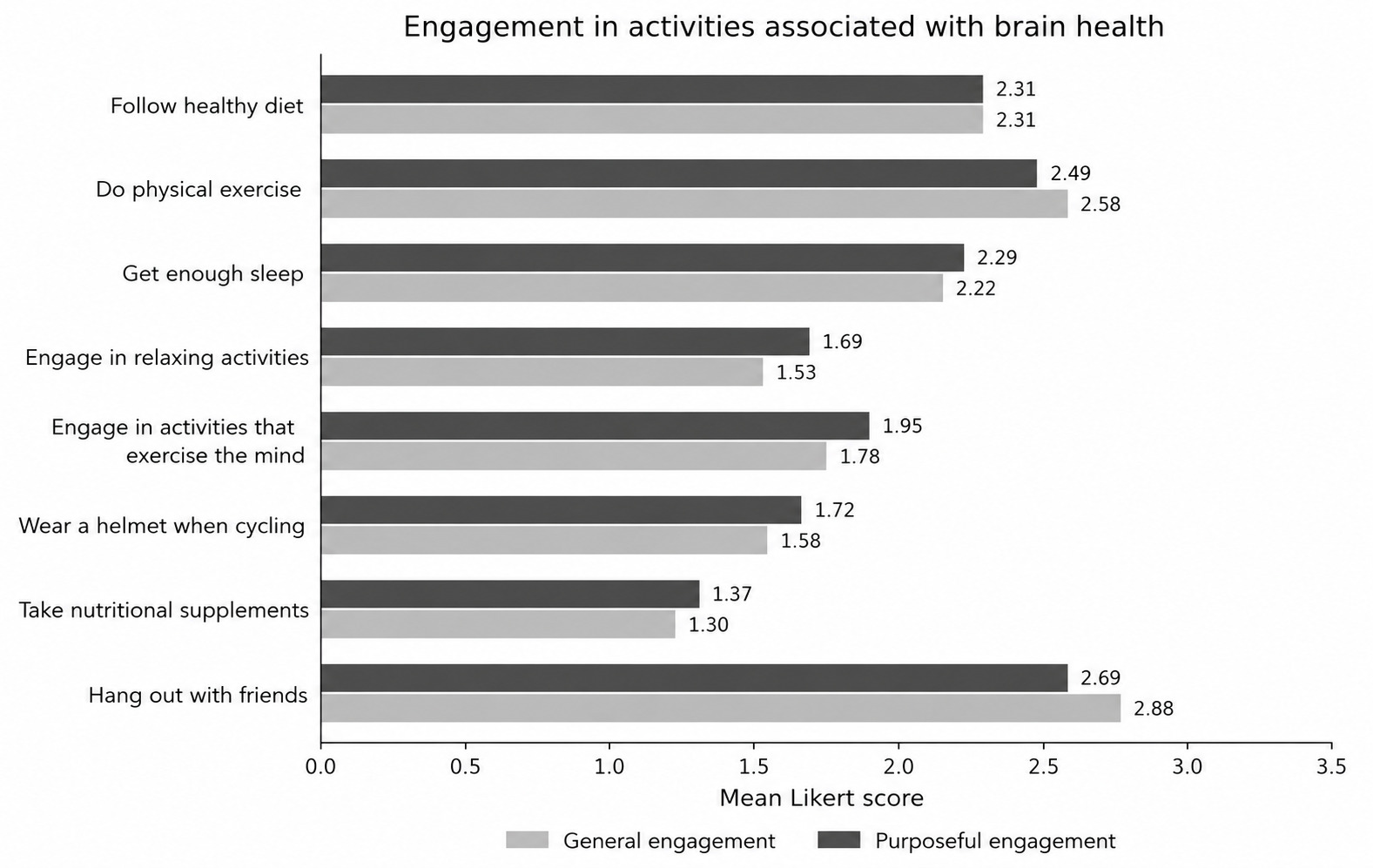
Female participants reported a higher frequency of engagement in brain health–promoting activities and greater likelihood of adopting lifestyle changes compared to males (p = 0.027 irrespective of brain health beneficial effects of the activity; p = 0.009 purposeful engagement because of the brain health-promoting effects of the activity). Additionally, participants without a family history of brain diseases scored significantly higher than those with affected family members (p = 0.008 irrespective of brain health beneficial effects of the activities; p = 0.007 purposeful engagement because of the brain health-promoting effects of the activity). Interestingly, the higher the frequency of thoughts about brain health, the higher the engagement of participants with brain health-promoting activities both intentionally and without explicit consideration of brain health (p < 0.001 in both cases).
4.4. Openness to lifestyle changes for reducing the risk for brain diseases
Openness to lifestyle changes for reducing the risk of brain diseases demonstrated questionable internal consistency (Cronbach’s alpha = 0.636). “Doing more physical exercise” and “hanging out with other children” were the most likely changes to be adopted (e.g., mean = 2.85 ± 1.156), whereas participants were least open to “doing more relaxing activities.”
Female participants reported significantly greater openness to lifestyle changes compared to males (p = 0.001). More frequent thinking about brain health was also associated with greater openness (p < 0.001), with pairwise comparisons indicating higher scores among participants who reported thinking about brain health “often” compared to those reporting “rarely” or “never” (adjusted p = 0.002–0.010). Family history of brain disease and parental education were not significantly associated with openness to lifestyle change.
5. Discussion
5.1. Interpretation of findings
The GBHSQ-C provides valuable insights into children’s awareness of brain health and their engagement in brain health–promoting behaviors. This study, conducted in Western Greece, highlights the importance of early interventions to promote healthy lifestyles and reduce the risk of cognitive decline, neurological disorders, and mental illness across the lifespan4,5,14,21
Participants demonstrated a moderate understanding of brain health determinants, particularly recognizing the role of education, physical activity, and diet, in line with previous research.14,22,23 The study also showed that participants frequently engaged in social interactions and physical exercise, both on purpose and without regard to whether these activities had beneficial effects on brain health, as these activities significantly enhance cognitive and emotional resilience.22,23 In contrast, the low importance assigned to substance use may reflect limited understanding of addiction among children24 or potential misinterpretation of the questionnaire item, as suggested by improved internal consistency when this item was excluded. Overall, these findings highlight the need for targeted educational interventions addressing the impact of substance use on brain health.
Participants identified childhood and adolescence as the most critical periods for brain health, consistent with evidence highlighting the importance of early-life and developmental factors across the lifespan.25,26 This may reflect an emerging awareness and proactive attitude toward brain health even at a young age .11,22 The high level of awareness observed may also be influenced by the relatively high parental educational background, which has been associated with greater engagement in health promotion and awareness initiatives.27
Brain health is a relatively new concept with cognitive, sensory, social-emotional, behavioral, and motor aspects.28,29 Consistent with this complexity, participants showed difficulty accurately identifying brain-related diseases, frequently misclassifying conditions such as arthritis and showing lower recognition of disorders such as bipolar disorder and Parkinson’s disease. These findings highlight limited familiarity with the concept of brain health and underscore the need for age-appropriate education to improve understanding of brain-related conditions.30–32
Engagement in brain health–promoting activities was strongly associated with thinking about brain health, suggesting that awareness may play an important role in motivating behavior even at this age. The lower engagement observed among participants with a family history of brain disease should be interpreted with caution and warrants further investigation. If confirmed, this finding may reflect potential behavioral or contextual factors that require further investigation.33
Consistent with typical behavioral patterns in this age group, participants were more willing to adopt lifestyle changes related to physical and social activity, while mindfulness and relaxation strategies were less favored.34 Despite their demonstrated benefits, such approaches are not widely implemented in school settings, which may explain children’s limited familiarity and lower acceptance.35 Similarly, the low use of nutritional supplements likely reflects their limited clinical indication and restricted use in children due to safety and regulatory concerns.36
The association between educational and cognitive activities with brain health promotion may reflect an implicit link, even at this age, to the concept of cognitive reserve.37 This aligns with evidence suggesting that higher brain resilience and compensatory capacity can mitigate the clinical expression of underlying pathology .38
Gender differences were observed, with female participants reporting higher engagement in brain health–promoting behaviors and greater willingness to adopt healthier habits, highlighting the need for gender-sensitive educational approaches. This pattern may reflect greater health awareness among females, potentially linked to the higher prevalence and progression of certain brain disorders in women.39–41
Despite these promising outcomes, socioeconomic and family-related factors were not strong predictors of engagement, possibly reflecting the difficulty of conveying such complex concepts to children. Early integration of brain health education in school curricula may enhance long-term awareness and promote knowledge transfer from children to their families.42
5.2. Limitations and Future Directions
The current study’s cross-sectional design limits the ability to infer causality, allowing only for the identification of associations between variables. Its focus on the particular context of public primary schools in the metropolitan area of Patras in Western Greece reduces generalizability to other cultural contexts. The sample was based on school-level participation and consent procedures and may not be fully representative of all children in the region. The questionnaire was adapted for children; however, no formal readability assessment or pilot testing was conducted, potentially influencing comprehension. In addition, no formal co-design process or Patient and Public Involvement and Engagement procedures involving children were implemented during questionnaire adaptation. As a result, some topics that may be particularly relevant to contemporary child brain health perceptions—such as social media use, artificial intelligence, peer pressure, school-related stress, and mental health concerns—may not have been adequately captured. Future studies should incorporate participatory approaches involving children during instrument development to improve age relevance, comprehensibility, and contextual validity. Future research should adopt longitudinal designs to track changes in knowledge and behaviors over time.
5.3. Implications
This study underscores the relevance of brain health for students attending primary schools, while it sheds light on knowledge gaps and on the need of awareness raising campaigns. Tailored educational interventions can significantly enhance children’s awareness and engagement in brain health-promoting behaviors. The findings point to the importance of incorporating brain health education into school curricula to foster lifelong brain health-promoting habits.
Authors’ contributions
G.K. and P.A. conceptualized the study and coordinated its implementation. G.K. also led data collection and drafted the initial manuscript. E.G. contributed to data analysis, interpretation, and substantial revision of the manuscript. A.B. and P.E. led the statistical analysis and contributed to the interpretation of findings. G.A., A.A., N.M., S.T., and K.K. provided contextual input during the design phase and reviewed the final manuscript. All authors reviewed the manuscript.
Data Sharing
The datasets used and/or analyzed during the current study are available from the corresponding author on reasonable request.
Disclosures
The authors declare that they have no competing interests.
Funding
This research received no external funding.