INTRODUCTION
Brain health is not simply the absence of disease but the total of our physical, emotional, social and cognitive health. Our brain health is strongly influenced by the social and physical surroundings and conditions in which we were born and live and this includes the quality of our housing.1–3 However, there is limited awareness of how housing affects brain health, or of how brain health can be improved through better housing, urban design, and planning as part of wider community development approaches.4
We know that infrastructural and design components are critical to successful and sustainable housing; however, housing for brain health needs much more than ‘bricks and mortar’; it is essentially a series of relationships between those who provide homes and those who live in them, between families who become part of wider communities, and between the State and the market.5 Therefore, it involves creating homes and delivering services to develop and sustain communities as part of the wider urban environment. A home is where you live: it provides shelter, safety, and security, and the community enables a sense of belonging, identity and connection, allowing people to develop and grow. Moreover, having a safe place to call home is essential for the enjoyment of many other fundamental rights such as education, employment, privacy and play, all of which are key to the development of the brain.6–8 The neurological impacts of environmental factors are long established in animal models, and there is increasing evidence that environmental factors such as the physical environment can influence neurodevelopment, mental health and wellbeing.9,10 There has also been growing attention to how modifications to built, urban, living, and working environments can positively affect individual and collective wellbeing,11–15 and to how our cities, towns, and communities might support and enhance brain health.16
In this way, housing, and the places and conditions in which we live, can be seen to contribute to the overall state of our brain health. In rethinking housing, urban design, and planning from the perspective of promoting brain health, community and ‘place’ based approaches are particularly relevant in creating sustainable, equitable and contextually relevant interventions.17,18 The development of a brain health community framework, is an initial attempt to bring these considerations together in an approach that can support community led development and implementation.
The Global Brain Health Institute and Respond Approved Housing Body (one of Ireland’s largest providers of social and affordable housing) have collaborated over several years to develop an understanding of how the principles of life course brain health might be implemented in the context of housing design, community development, service provision and support. The Brain Health Village (BHV) project was an initiative to develop and implement a brain health informed approach to housing and community development within a social housing estate managed by Respond.
OBJECTIVE(S)
To provide a conceptual starting point for the BHV project, we developed an evidence-informed conceptual model of what a brain health-supportive community would look like, drawing on input from intersectoral expert stakeholders, and use this framework as an input into a co-development and a prioritisation process with the community at Rathcoran, Baltinglass, Co. Wicklow, Ireland.
METHODS
Group formation: Framework Development Group members were chosen to represent a wide range of expertise in the area of brain health and housing. Membership was drawn from academia, from housing delivery & services, advocacy, innovation, implementation science, and arts, creativity and culture. While the group was largely Irish, there was also expert representation from elsewhere in Europe, New Zealand and South America, which provided an international perspective. Three group members coordinated the process, including meeting design and facilitation, collating and analysing inputs, and drafting successive versions of the Framework document.
Development process: The initial concept-development approach was informed by adapted nominal group and consensus-method approaches.19,20 Before the first meeting, all members were provided with an information pack of materials and resources, which provided a framing in brain health, housing policy, design and environmental considerations. The information pack included training materials on brain health, policy documents including a WHO white paper on brain health,3 academic papers on brain health including the Lancet Commission Report,21 as well as technical and policy documents relating to housing. In the first meeting, participants submitted ideas utilising digital visualisation/collaboration tools (i.e., MiroBoard – an online collaborative whiteboard), which were then discussed, categorised and eliminated or included by group discussion and consensus, with facilitators ensuring that all contributors had opportunity to discuss their suggestions. The overall approach was further adapted across the three group meetings (Table 1), with a blend of offline work and individual meetings with various contributors as needed to gather input, developing successive versions of the model which were circulated to gather further input before discussing as a group.
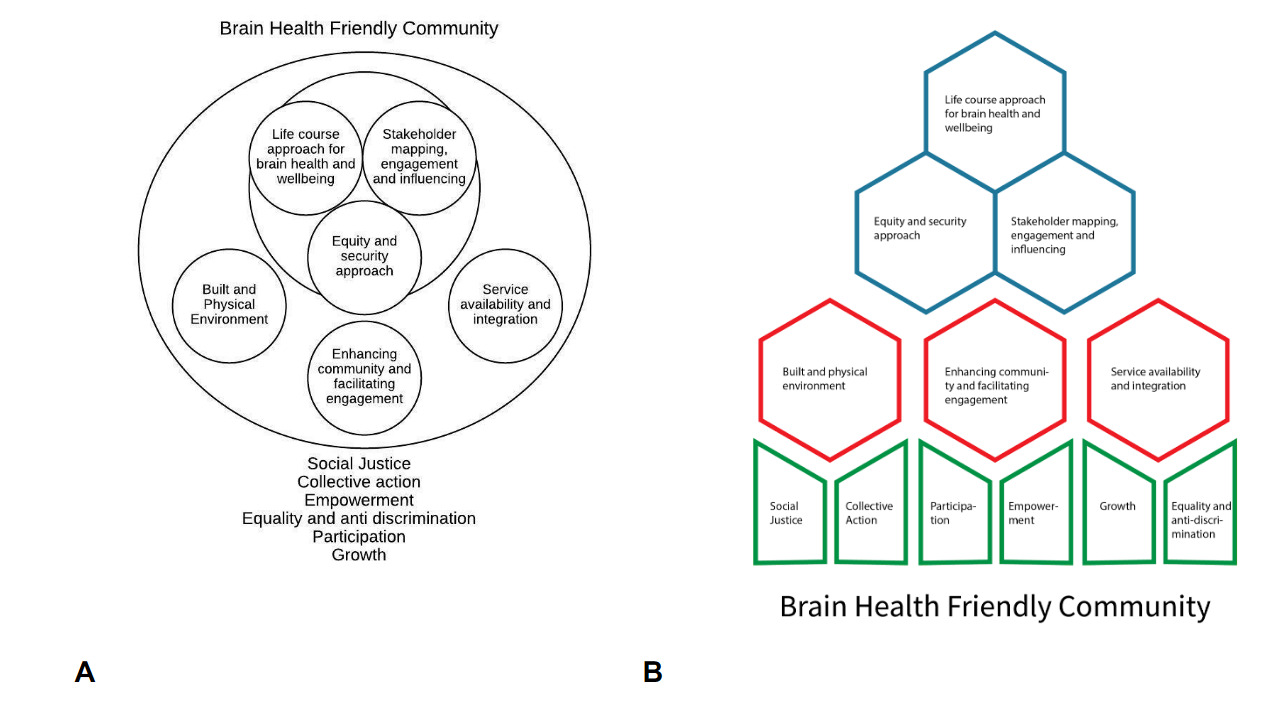
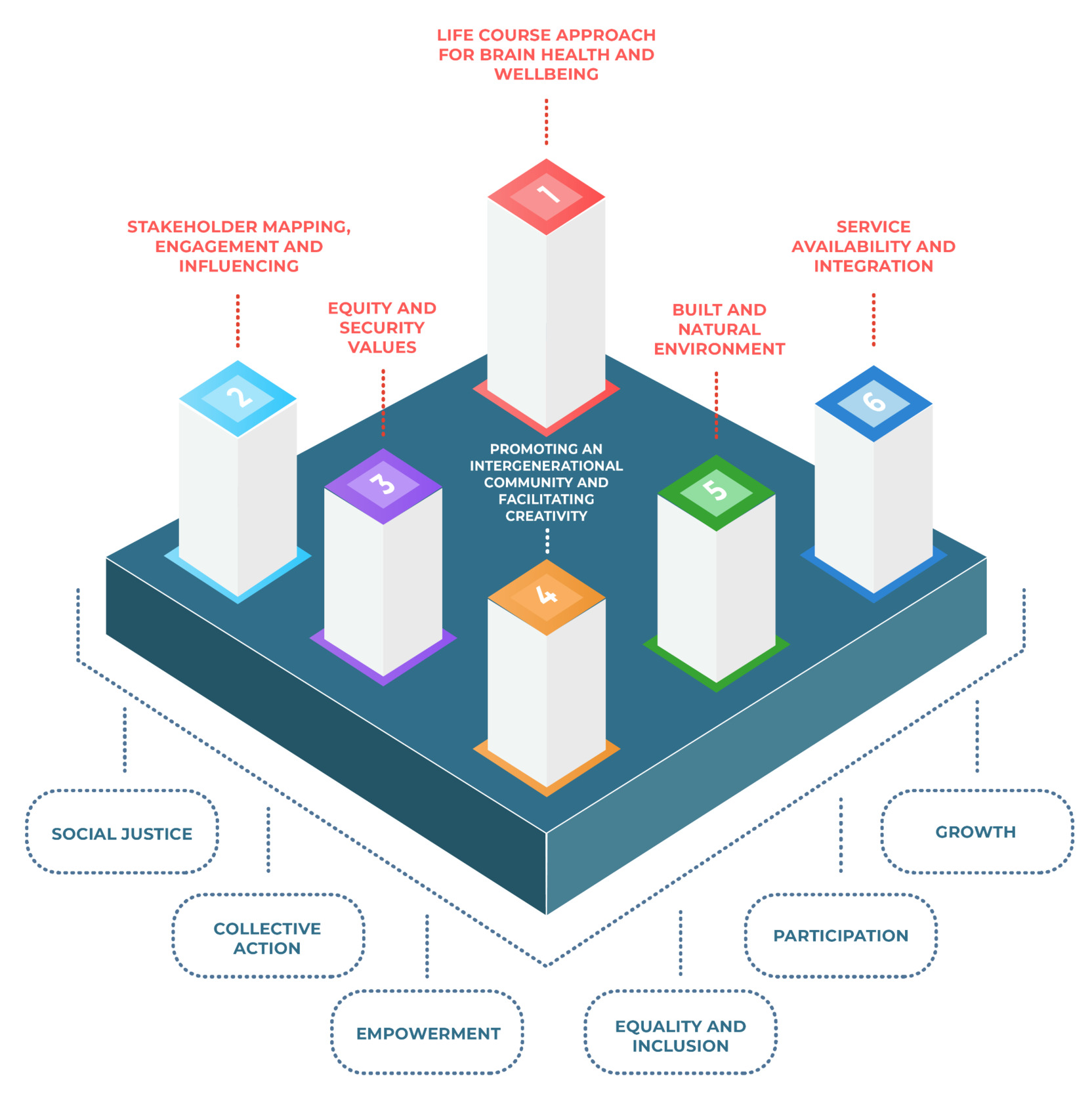
The output of meeting 3, was developed further, shared offline and then used in a needs assessment workshop as detailed below. Following the meeting, minor changes were made, and the final draft version was circulated to all contributors for approval (Figure 1a and 1b).
Use in co-development and needs assessment: As part of the wider needs assessment phase of the BHV project, a series of workshops were undertaken with tenants of the social housing development in Rathcoran, which was also used to test the application of the framework as an aid to this process. The development in Rathcoran has a diverse tenant community, comprising younger, middle aged and older individuals from a variety of backgrounds. The first workshop focused on developing a shared understanding of brain health through discussion of examples of how to maintain or improve brain health. The discussion yielded 120 ideas which were coded into 13 categories. The second workshop focused on identifying needs and actions or solutions (42 needs listed) based on the proposed pillars. In this workshop, the pillars were rewritten as ‘bricks’, using more general lay language to increase accessibility and understanding. Participants worked in groups of three to five and were given sheets for each brick or pillar. These sheets included space for participants to record what they felt might be included under each ‘brick’, as well as the factors that could help or hinder these actions, namely enablers and barriers. The information from each group and brick/pillar was then shared with the wider group and mapped for further discussion. Next, the third workshop focused on prioritising those needs and solutions, using level of importance or priority (high to low), and urgency (high to low) as axes, with four quadrants divided by two axes. The final workshop was conducted with other local stakeholders to review both the framework project and the mapped needs discussed by the tenants.
RESULTS
The development group produced a framework to guide and support those working in housing and communities, including practitioners, community engagement organisations, policymakers, and researchers. It introduces the concept of brain health-supportive communities and the value of delivering both housing and services using this approach. The goal was to provide a conceptual and practical ‘starting point’ towards creating a brain health-supportive community, which can be adapted for the specific conditions of a given community through a process of stakeholder engagement and co-creation.
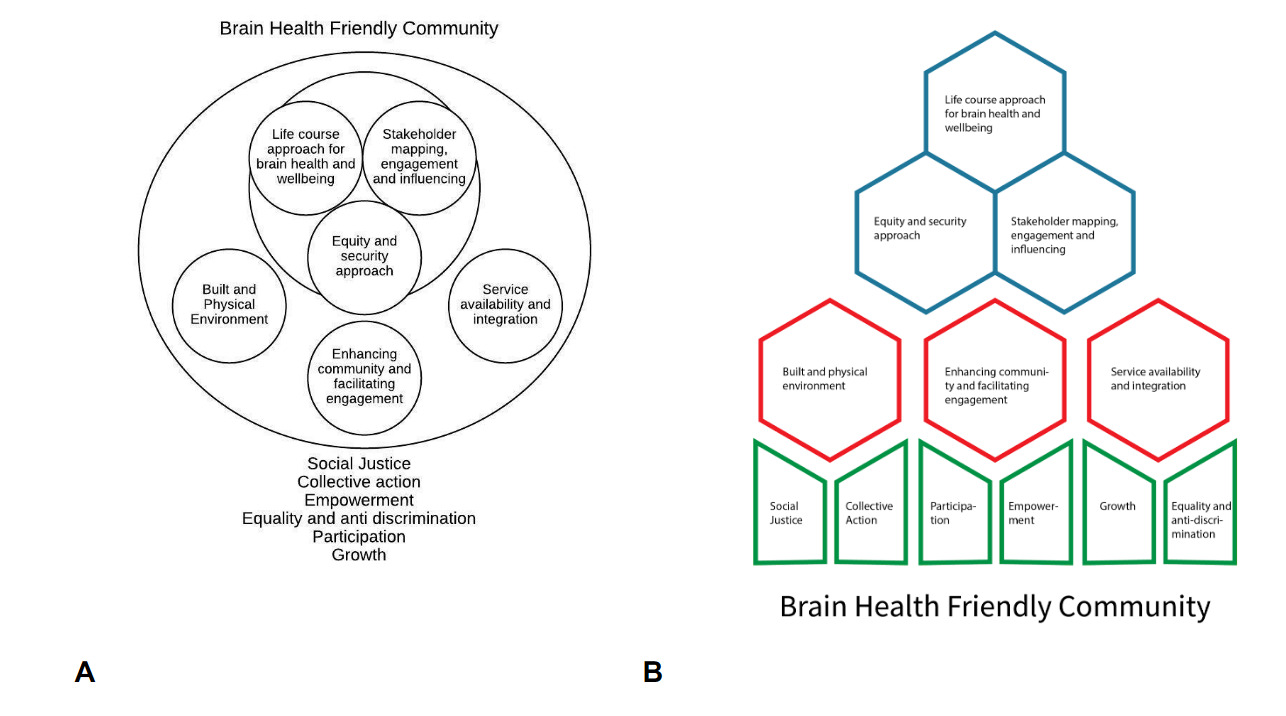
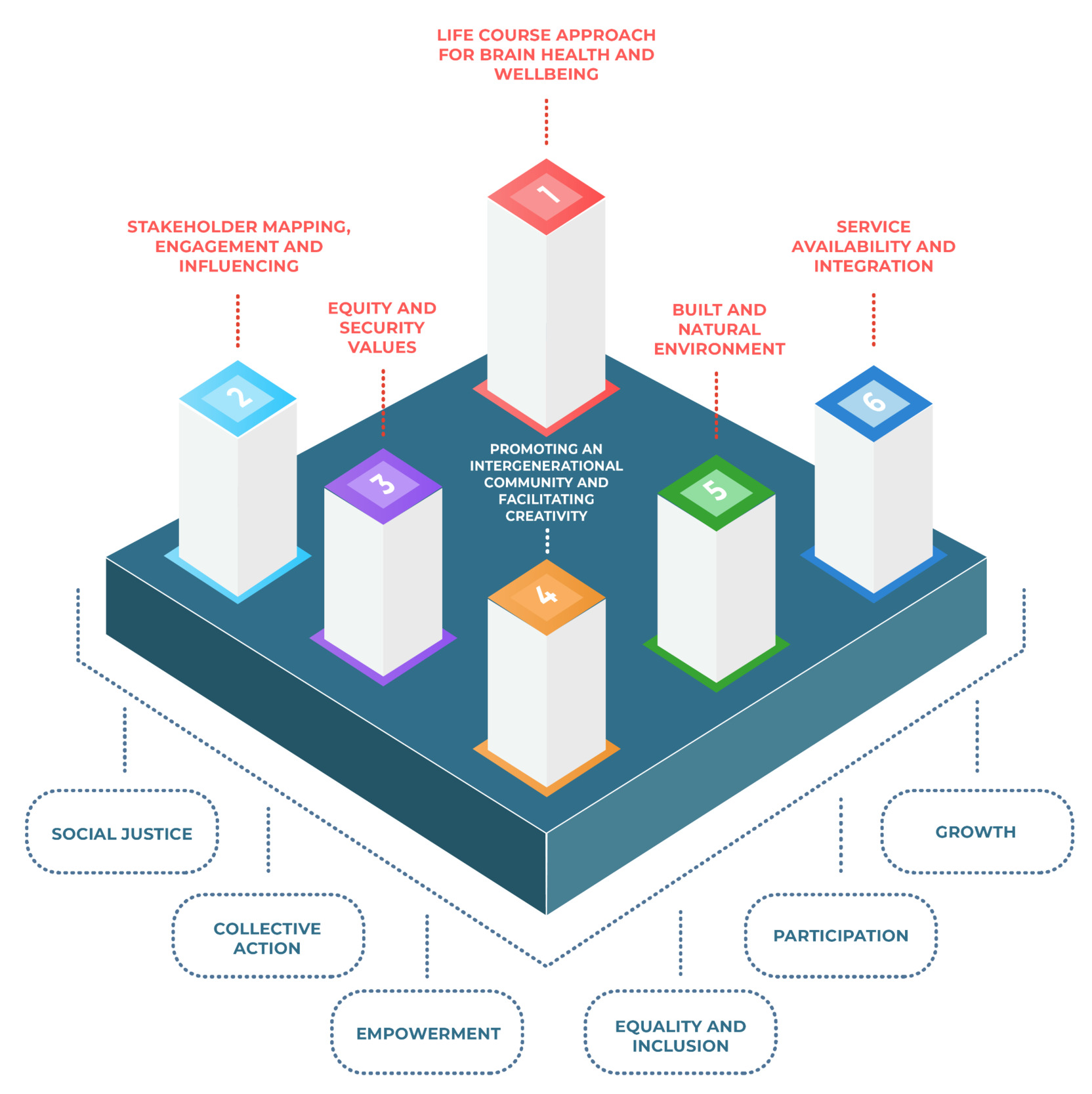
As such, the framework outlines a values-based conceptual model based on the six pillars summarised below.
In this model, pillars 1-3 form foundational, practical, and value-based actions, which support the wider areas of implementation of pillars 4-6 (see Supplemental Materials for complete framework which provides deeper exploration of the summary points below). For the purpose of the framework ‘residents’ are defined as members of the community who live in the local neighbourhood/estate or are directly involved in implementing the project. They may be tenants of a housing body, be owner occupiers, or rent from a private sector or other landlord.
Brain Health Community Framework Pillars
-
Life course approach for brain health and wellbeing: Focusing on building an understanding and awareness of brain health amongst community members, policy and decision makers. Supporting individuals and communities to understand the collective actions that they can take to protect and promote brain health and reduce stigma.
-
Stakeholder mapping, engagement and influencing: Establishing the community as part of an interlinked network and developing an understanding of all political and policy actors relevant to that community to navigate this complex landscape. Taking a politically informed approach to promoting change focused on securing political buy-in and engagement at local and higher levels, ensuring that the message is communicated to their stakeholders to ensure access to resources and support.
-
Equity and security values: Underpins the aim of creating equitable, safe, and inclusive communities that prioritise fairness and respect by empowering residents and stakeholders while considering the impact of past or current experience of trauma, violence, and power dynamics on healing and safety. Personal identity and social inclusion are important factors, along with a focus on security, privacy, safety, and community. The pillar seeks to create a balance between stability and change and recognises the potential of home as both a safe and potentially traumatising place.
-
Promoting an Intergenerational Community and Facilitating Creativity: Creating a community that fosters engagement, cooperation, and support among its members, where contributions from people of all ages and experiences are valued, and where creativity and engagement in the arts is viewed as a valuable tool to promote well-being, protect brain health and build community. Viewing the community as both the immediate neighbourhood/setting, and the wider community in the locality (i.e., town, city, county), using co-creation as central practice in promoting agency, building trust and creating intergenerational connections, sustaining brain health at an individual and community level.
-
Built and Natural Environment: Applying universal design principles in the creation of physical environments and community spaces that prioritise sustainable, accessible, pleasant, and well-maintained spaces. Emphasising the integration of natural and digital elements to create environments that encourage inclusion, social interaction, security, physical activity, and reduce stress, all of which are pro-brain health.
-
Service availability and integration: Supporting a community to access or develop a range of services and resources to meet the needs and interests of its residents throughout their life and encourage intergenerational connection. This includes the availability of leisure services, secure and affordable homes, access to information and cultural services, and linkage with important services such as schools, education, and healthcare, and the integration of these services into the community itself. Service access and availability are important risk and protective factors for brain health.
In the overall framework, each pillar description is expanded with key principles, as well as enablers and barriers to its successful implementation (Figure 2 and Supplemental Materials). Social Justice, Collective Action, Empowerment, Equality and Inclusion, Participation and Growth were agreed to form the values base of the framework.
DISCUSSION
Overall, the process produced a robust and well-structured framework, which was successfully used to structure activities with the community in Rathcoran. The framework reflects the conceptual ideals of a brain health-friendly community and consideration of its real-world implementation. Building a foundation of brain health awareness and knowledge is a key first step. As with most public health approaches, awareness building about the issues at individual and community levels is a foundational element of building brain health informed societies.22,23 Focusing on the socially determined nature of health and brain health also draws attention to the value of other social ‘goods’ such as investment in early years education, or facilities supporting physical activity as being clearly linked to longer term health and brain health outcomes.24 This narrative is critical to the second pillar, the need to engage, inform and co-create not just a core group of residents, but the wider community and relevant sectoral and local governmental stakeholders. Understanding and engaging these intersecting groups of constituents and stakeholders is an essential and well-established activity in health, housing and community development in order to achieve greater impact and encourage better use of resources.25–28 Home is framed as a place of stability and security, acknowledging the significant effects of housing instability on mental health29–31 and affirming housing stability as a fundamental right.32 The document also demonstrates an awareness of brain health and implementation considerations in relation to complex domestic situations, personal choice, and histories of trauma.31,33,34
Social connection is a key modifiable life course risk factor for brain health, with the wider health impacts of loneliness on health and brain health well established.35 The role of creativity as an accessible and affordable mode of building community across generations is highlighted. This is consistent with the literature, which shows the positive impacts of creative engagement on health and wellbeing across the life course.36–38 The value of arts and creativity to support agency at an individual and community level has also been highlighted in the literature.39
Although there is an emerging literature on the concept and practice on brain health informed design and planning,40–42 as well as broader universal design approaches for ageing and cognitive impairment,43 applying these principles within housing and social housing can be challenging. This is particularly the case when such approaches must be retrofitted into existing infrastructure.44 Within the framework there is a focus on maximising the use of existing assets, recognising funding limitations – for example through incorporating or ‘green’ or nature elements,45 or opportunities to enhance the aesthetic component through arts and creativity.
Finally, the availability of services and amenities, including shops, health services, schools and cultural facilities are considered. This makes transport, access to healthy food, health and education services central to the approach.46,47 The lack of services in disadvantaged areas is often cited as multiplier of inequity, and there are clear links to brain health, for example access to primary care facilitating diagnosis and management of mid-life cardiovascular disease and diabetes,48 documented scenarios such as food deserts in urban areas impacting nutrition and development.49,50 At the micro level this arguably presents the most aspirational aspect of the model as individual communities may have little agency regarding the services that are available. However, demonstrating this component as part of a wider brain health approach is relevant at the meso and macro levels of planning and policy.
Wider Relevance
Housing and the creation of sustainable communities is a global challenge. Many countries in the global north are facing significant challenges in terms of housing provision, with a crisis of affordability and supply encouraging much-needed changes in traditional tenure models and modes of supply (e.g., cost rental housing in Ireland).51 This is particularly acute in some European countries, which face multiple challenges including ageing populations living in unsuitable housing, lower levels of owner-occupation as well as the need to accommodate and integrate migrants.52,53 Lower and middle-income countries (LMIC) face much greater challenges, including significant inequalities in standards of housing, the challenge of growing populations, and rapidly developing urban areas with poor planning and high levels of pollution.54–56 In addition, LMICs face greater challenges related to the impact of the climate crisis, and the effects of demographic transition and changes in household size and makeup 57.
The framework is an attempt at a values-based brain health-informed approach to these global issues in the ‘local’ context of the Irish housing, that is person-centred, equity-focused and informed by social justice principles. The core principles align with wider movements towards sustainable urban planning and architecture, including the New European Bauhaus57 or the New Urban Agenda.58 They also reflect growing recognition of the built environment as a determinant of mental and physical health, as promoted by WHO Healthy Cities59 and are consistent with Sustainable Development Goals (SDGs) # 3, 10, 11.60 Additionally, the pillars of this framework can inform policy at scale, calling for a whole of society and a whole of government approach to housing and brain health, supporting individuals and communities at a local, regional and national level.
Brain health cannot be proposed as a panacea for such complex challenges. However, we would argue that a brain health-informed approach at the micro, meso, and macro levels of community development, housing and health policy can provide novel insights and opportunities. While developed in the context of an Irish project, we would argue that further development of concepts like the Brain Healthy Community Framework can contribute to the advancement of a ‘whole of society’ approach to supporting and protecting the brain health of future generations.
Limitations
A major limitation of this iteration of the framework is the lack of direct input and involvement of community members in its development. While the voice of the community was in part represented through the presence of the tenant relations officer (TRO) on the working group, our degree of direct engagement with the community in its development was limited. It should be noted however, that the framework was primarily used to help structure needs assessment and wider conceptualisation, rather than being a directive guide to the project. We would intend that any future iteration of this document would be developed with more direct involvement and representation of community members who would be involved with project implementation.
Conclusion
From the inception of the BHV project proposal, the development of a conceptual framework for a brain health-friendly community was viewed both as an input into the BHV project and as an exercise in its own right to develop this ‘new idea’. While we would present this document as comprehensive in its own right, given the project specific circumstances of its creation, there are a number of areas for further work and development.
As noted, while the document reflects a broad range of approaches and concepts, it is rooted in what may be achievable in the context of community development as aligned with the specific BHV project. As such, depending on the context of future application, a deeper exploration of design, health and care and economic aspects of this approach may be warranted. Additionally, although referenced, it may be helpful to more fully explore the accelerated digital and technological transformation, and the impact of same on health and brain health. Using this initial framework to structure wider expert input, through for example a Delphi exercise, would be valuable to broaden and deepen its relevance and applicability.
ACKNOWLEDGEMENTS
We would like to acknowledge the contribution of the framework development group (Coordinating Team: Dr. Eoin. J Cotter - Education engagement and strategy lead, Global Brain Health Institute, Trinity College Dublin; Reyhana Cushnan - Policy Manager, Respond; Macarena Espina Díaz - Atlantic Fellow for Equity in Brain Health, Global Brain Health Institute, Trinity College Dublin. Contributors: Niamh Randall - Head of Advocacy and Communications, Respond; Tom Walsh - Tenant Relations Officer, Respond; Neil Bolton - Head of Housing, Respond; Andrew Bray - Senior Project Specialist, Centre for Effective Services; Dr. Tom Grey - Research Fellow, TrinityHaus Research Centre, Trinity College Dublin; Dr. Michael Byrne - Lecturer/Assistant Professor, School of Social Policy, Social Work and Social Justice; Bairbre Ann Harkin - Engagement and Learning Curator, Irish Museum of Modern Art, Dublin; Prof. Brian Lawlor - Site Director, Global Brain Health Institute, Trinity College Dublin; Dr. Rutger de Graff - Innovation manager, Pennemes, Netherlands; Dr. Susanne Rohr - Associate Professor, Associate Professor of Epidemiology and Social Determinants of Dementia at the Centre for Healthy Brain Ageing (CHeBA), University of New South Wales (UNSW) Sydney as well as the contributions of the Rathcoran Tenants and other Respond staff to the pilot implementation of this framework.
DISCLOSURES
The authors have nothing to disclose.
FUNDING
This work was conducted without external funding.