INTRODUCTION
Stroke is a global public health challenge that leads to disability, dementia, mortality, and carries significant economic impacts.1,2 Increases in stroke prevalence have been associated with an increase in the ageing population worldwide.3,4 Older adult stroke survivors, defined by WHO as those aged 60 years and older, face challenges including physical disabilities, cognitive and speech impairments, high rates of depression, and severe difficulty accessing consistent community post-stroke care and financial support.5,6 These challenges are worsened in Africa where substantial disparities and health inequality exist.7,8
In Nigeria, stroke patients are often discharged without clearly communicated care plans for optimal functional recovery.9 Family caregivers of these patients often experience challenges in providing support and have poor knowledge and skills required to perform care activities.10 These systemic challenges highlight the urgent necessity for structured clinical guidelines to ensure adequate and appropriate care to reduce hospital readmissions. The intermediate care concept was introduced to improve the coordination of adequate care and safety during hospital discharge.11,12 The development of intermediate care is intended to promote safe and early discharge out of acute care, foster independence, and enhance reintegration in community settings.13,14
Basic intermediate care models include an integrated assessment and rehabilitation.15 Comparable to acute stroke intervention, intermediate care after stroke could improve longevity and quality of life.16,17 Evidence has shown that home-based intermediate care models, incorporated with training interventions for family caregivers, produce beneficial outcomes such as reduced risk of stroke recurrence and reduced mortality.18,19 Despite these potential benefits, there is little or no information on the development and implementation of intermediate care models for older adult stroke survivors in Nigeria.
OBJECTIVE(S)
This study aimed to develop and validate a home-based intermediate care model for improved functional outcomes and quality of life in older adult stroke survivors.
METHODS
Study Design
A methodological study involving the development and expert validation of a culturally adaptable intermediate care model using a two-round Delphi consensus process.
Development of the Preliminary Intermediate Care Model
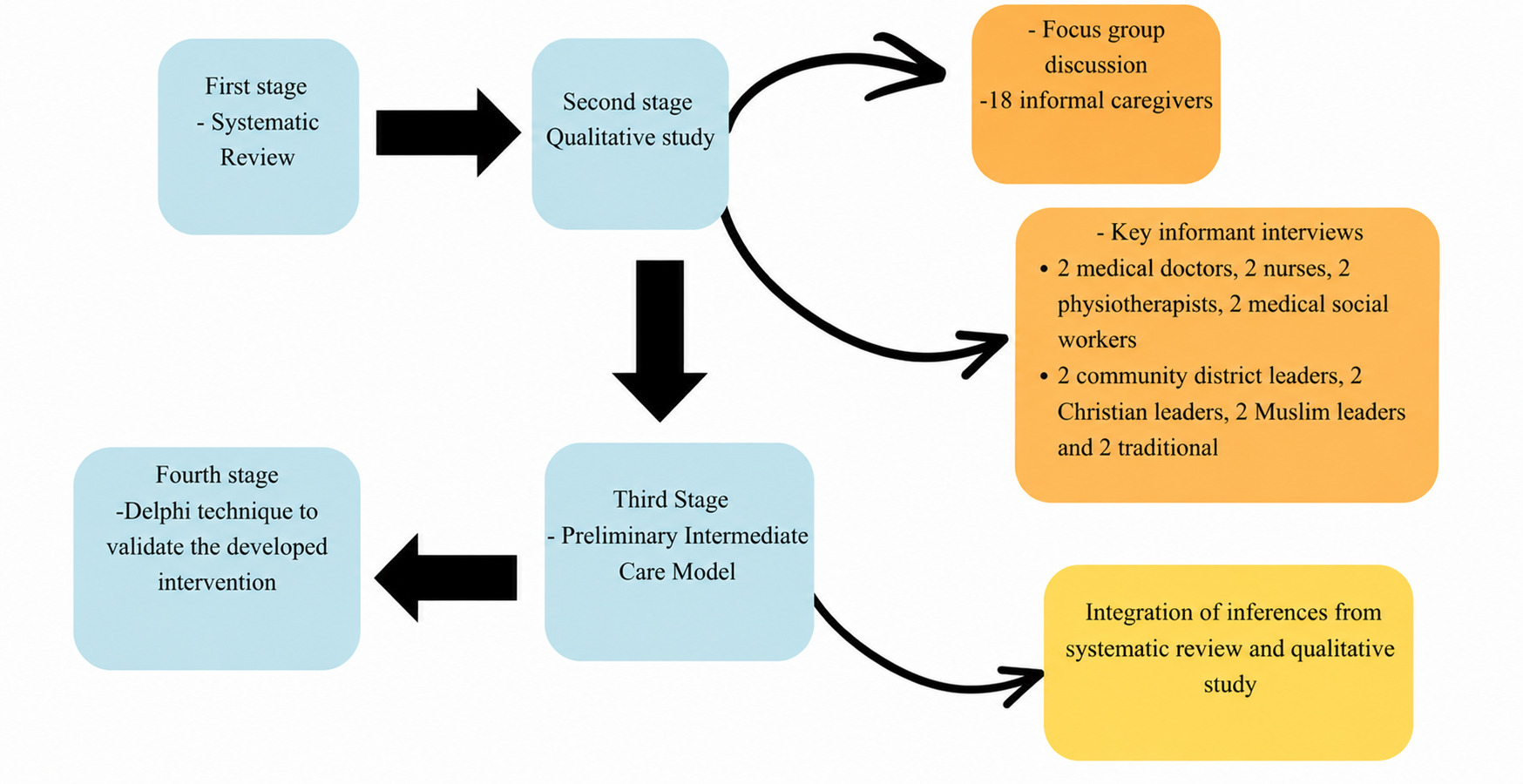
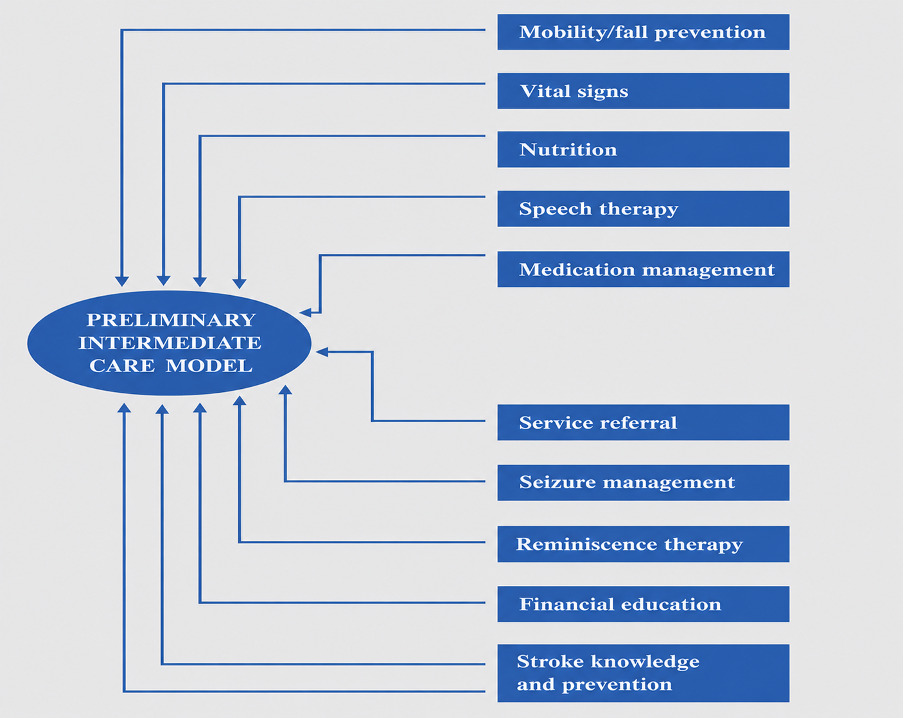
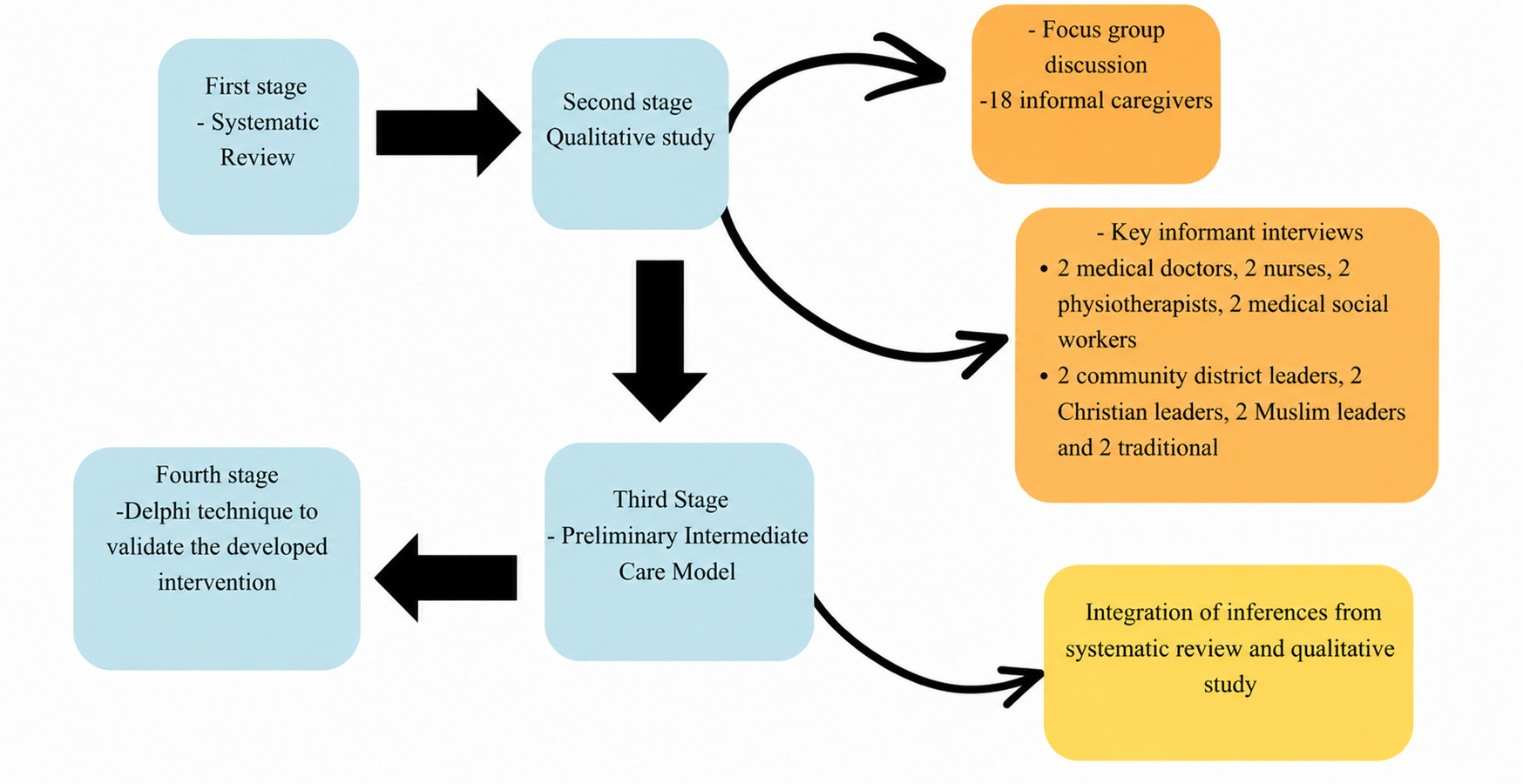
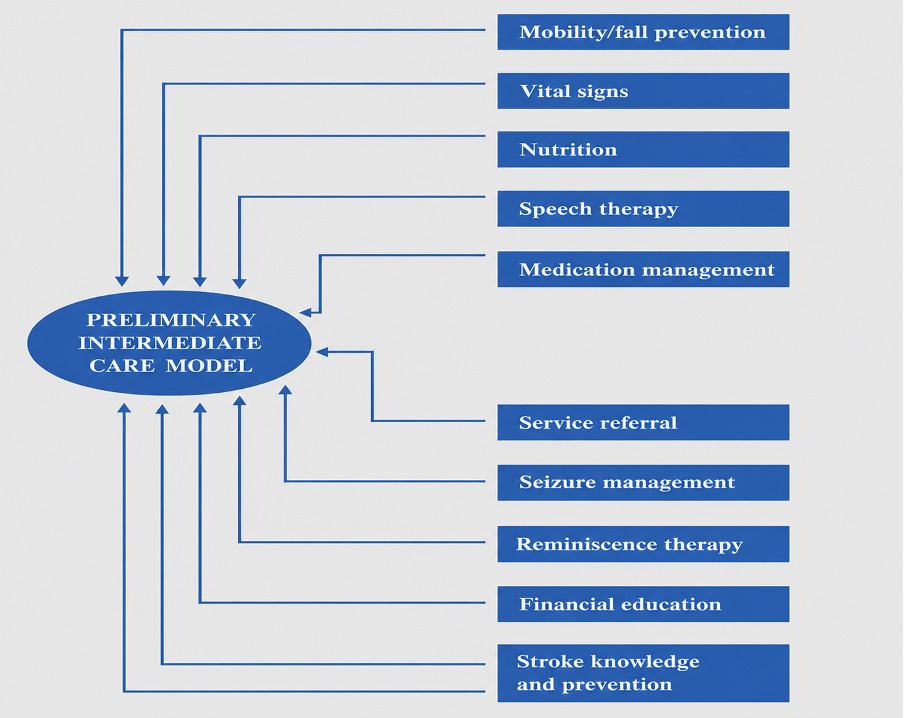
The development of the intermediate care model followed a mixed method approach (Figure 1). In the first stage, a systematic review of existing intermediate care models was conducted and reported following the PICO framework20 and the Preferred Reporting Items for Systematic Reviews and Meta-Analyses (PRISMA) guideline.21 Eleven studies were included in the review (See Supplemental Materials), which revealed diverse interventions employed in the rehabilitation of older adult stroke survivors, encompassing exercise programs, speech therapy, video-based programs, reminiscence therapy, and caregiver-assisted therapy. The interventions demonstrated beneficial effects on functional outcomes and overall quality of life of participants.22 Stage two of the process included the use of an explorative design to obtain in-depth views from 18 family caregivers of stroke survivors who participated in focus group discussion (3 focus group discussions with 6 caregivers per group). Key informant interviews were also carried out with 8 medical experts, and 8 community gatekeepers (Figure 2). Thematic analysis was conducted using NVivo (version 12 pro) software and the coding technique used was inductive-dominant approach. Inclusion criteria for this stage were: family caregivers who have a dominant caring role in assisting older adult stroke survivors aged 60 years and older; medical experts involved in stroke care; and community gatekeepers who have had contact with at least one stroke survivor. This was conducted to understand the perceived needs of older adult stroke survivors. Insights from the study demonstrated that intermediate care should encompass physiotherapy service, minor medical treatment, nutritional service, speech therapy, mood disorder management, financial management, and medication assistance.23 Following this stage, the preliminary intermediate care model (Figure 2 and Supplemental Materials) was developed by integrating evidence from the both the systematic review and the qualitative study.
Expert Validation
Selection and recruitment of experts: A multidisciplinary team of five medical professionals from a tertiary hospital were invited to participate in the review of the preliminary intermediate care model for accuracy and ease of use for older adult stroke survivors and their caregivers at home. The team comprised a consultant neurologist, a geriatric doctor, a geriatric nurse, a medical social worker, and a physiotherapist.
Validation tool/questionnaire: A 10-item questionnaire was developed to obtain experts’ opinions regarding the adequacy, relevance, and completeness of each domain of the preliminary intermediate care model. Each item was rated using a five-point Likert scale ranging from strongly disagree (1) to strongly agree (5). Open-ended comment boxes accompanied each item to enable experts to provide qualitative feedback and suggest modifications to improve the model (See Supplemental Materials).
Consensus criteria: Consensus was predefined as at least 100% of experts rating an item as agree or strongly agree.24 Domains that did not achieve the consensus threshold or received substantial qualitative comments were revised before the subsequent Delphi round.
Validation procedure: A two-round Delphi consensus process was conducted to validate the preliminary model. Experts independently reviewed the model and completed a structured questionnaire during each round. Feedback obtained in the first round was incorporated into the revised model before redistribution for the second round.
Data Analysis
Quantitative data were analysed using descriptive statistics. The Item-Level Content Validity Index (I-CVI) was calculated as the proportion of experts who rated each item as either agree or strongly agree. The Scale-Level Content Validity Index based on the Average method (S-CVI/Ave) was calculated as the average of the I-CVI values across all items, while the Scale-Level Content Validity Index based on Universal Agreement (S-CVI/UA) was calculated as the proportion of items that achieved universal agreement among the experts.
Ethical considerations
This work is part of a larger study with ethical approval from the University of Ibadan/University College Hospital (UI/UCH) Ethics Committee to ensure study compliance with the Helsinki’s declaration. The UI/UCH Ethics Committee assigned number is UI/EC/22/0410.
RESULTS
A total of 5 medical experts participated in the first Delphi round, the Item-Level Content Validity Index (I-CVI) ranged from 0.80 to 1.00. Six of the ten domains achieved an I-CVI of 0.80, while the remaining four domains achieved an I-CVI of 1.00. The overall Scale-Level Content Validity Index/Average (S-CVI/Ave) was 0.88, indicating good overall content validity. However, the Scale-Level Content Validity Index/Universal Agreement (S-CVI/UA) was 0.40, reflecting that universal agreement was achieved for four of the ten domains only (Table 1).
Following the first round, the model was revised based on expert comments. Only one expert made comments, therefore, no formal qualitative analysis was performed. The comments were incorporated into the model before the second Delphi round. The principal recommendations were to strengthen the medication management domain by including a comprehensive list of the stroke survivor’s medications to facilitate communication during hospital visits and consultations with other healthcare providers, ensuring that caregivers obtain and document daily vital signs measurements (i.e., blood pressure, pulse, temperature, and respiratory rate) to track changes, promoting a healthy lifestyle, encouraging the children and family to be involved in assisting the patient financially.
The revised model was redistributed to the experts for the second Delphi round. In the second round, all ten domains achieved an I-CVI of 1.00, indicating 100% universal agreement. Similarly, both the S-CVI/Ave and S-CVI/UA reached 1.00 (Table 2), demonstrating excellent content validity and complete consensus on the final model.
The final validated model (Table 3) was translated into an audio-visual resource (URL in Supplemental Materials) to complement the written intermediate care model (Supplemental Materials). This adaptation was implemented to optimize family caregivers’ comprehension of the intervention guidelines and facilitate adherence to the guidelines within the home setting.
DISCUSSION
These findings indicate that the iterative Delphi process successfully improved the content validity and acceptability of the model. The development and validation of the intermediate care model identified 10 caregiving domains: stroke knowledge, seizure management, medication management, mobility and fall prevention, vital signs monitoring, service referral, reminiscence therapy, speech therapy, nutrition, and financial education. These domains are important because stroke survivors often experience deficits across multiple functional and quality-of-life areas, leaving caregivers feeling unprepared for their roles.25 As stroke severity and recovery needs differ, personalized post-discharge care is essential.26 Adequate caregiver education may therefore improve recovery outcomes and reduce caregiver burden.
The model was validated using the Delphi technique, which is widely applied in stroke intervention research.27,28 Consensus was reached among a multidisciplinary panel consisting of a geriatric doctor, neurologist, geriatric nurse, medical social worker, and physiotherapist. The model was informed by evidence-based literature and stakeholder perspectives on intermediate stroke care, consistent with previous studies that developed intervention manuals from literature reviews.29
Our findings are consistent with previous studies in Global South regions that developed intervention packages for stroke survivors and their caregivers. Similar interventions developed in India included education on stroke recovery trajectory, risk identification and management of low mood, task-specific rehabilitation activities, goal setting involving the patient and family caregiver, mobility training, and discharge planning.30,31 In comparison, our study developed a broader caregiver-focused model that emphasized stroke knowledge, medication management, and service referral.
The stroke knowledge domain in our intervention addressed stroke risk factors, symptoms, and prevention strategies, which aligns with earlier studies highlighting the importance of educating caregivers on stroke recovery and prevention. This is particularly important because inadequate caregiver knowledge and skills in post-stroke care may place both caregivers and stroke survivors at risk.32,33 In addition, while previous interventions emphasized rehabilitation activities such as mobility and task-oriented training, our study further incorporated medication management, recognizing that many caregivers experience challenges with the safe and timely administration of medications after discharge.34
Another important distinction in our study was the inclusion of a service referral domain, which emphasized timely access to specialist care. This domain reinforced the importance of early treatment-seeking behavior among stroke survivors and caregivers when complications arise beyond the scope of home-based management.35 While discharge planning was also highlighted in previous studies, our intervention extended this concept by explicitly guiding caregivers on when and where to seek specialized rehabilitation and supportive services. Overall, both our findings and previous studies underscore the importance of multidimensional caregiver education in improving continuity of care and supporting post-stroke recovery.
Although experts recommended additional clarification in some areas, consensus was reached to retain all domains in the model, suggesting their relevance to improving stroke outcomes. To enhance usability, a 25-minute audio-visual recording demonstrating the training content was developed. Previous studies have also explored technological approaches for caregiver interventions in stroke care.36,37
Task-shifting to caregivers in resource-constrained settings may reduce hospital admissions and improve outcomes for stroke survivors.38 The proposed model offers a cost-effective approach for stroke care in Nigeria, where access to rehabilitation infrastructure and skilled personnel remain limited. While the intervention has not yet been implemented, the development and validation process suggest it is conceptually appropriate for home-based stroke care, particularly in settings where family members provide most caregiving. However, effective implementation will require caregiver training, healthcare coordination, and access to rehabilitation resources.39 Notably, caregiving responsibilities are often disproportionately borne by women, which may increase caregiver burden and reinforce existing inequities.40,41 Future research should therefore examine caregiver experiences and explore strategies for developing more equitable and supportive care models.
STRENGTHS AND LIMITATIONS
A major strength of this study is the design of the intermediate care model which is perhaps the first of its kind in Nigeria. Limitations of the study include the use of a small number of professionals and the exclusion of community stakeholders in the validation process. Additionally, the use of a single language (English language) in the audio-visual resource may hinder the effective use of the package among non-English-speaking family caregivers. Future adaptations and translations of the care model into other languages will be critical for maximizing the accessibility of these resources.
CONCLUSIONS
In conclusion, this study successfully developed and validated a culturally adaptable intermediate care model for older adult stroke survivors. This structured framework is poised to significantly bolster home care support post-discharge, thereby ensuring continuity of care. Future investigations must rigorously assess the model’s feasibility, acceptability, and ultimate effectiveness in improving clinical outcomes for stroke survivors. Ultimately, these findings provide critical evidence that can inform policy development concerning integrated stroke care pathways and discharge planning for vulnerable older adults.
ACKNOWLEDGEMENTS
The authors sincerely acknowledge all healthcare professionals who contributed to the success of the Delphi consensus process and qualitative interviews, for their valuable time, expertise, and contributions to the development and validation of the home-based intermediate care model. We also appreciate the family caregivers and stakeholders whose experiences informed the development of the model.
AUTHOR CONTRIBUTIONS
Conceptualization of study Design- Temitope Farombi, Muili Lawal and Hafiz Khan. Data Collection- Temitope Farombi. Data Analysis - Temitope Farombi, Muili Lawal and Hafiz Khan. Critical review - Muili Lawal and Hafiz Khan. First draft - Temitope Farombi. Final draft - Temitope Farombi, Muili Lawal and Hafiz Khan.
DISCLOSURES
The authors report no conflicts of interest.
FUNDING
This study received no external funding.